Uvily Light
Transformers play a crucial role in landscape lighting systems. When these devices fail, it can leave outdoor spaces dim and uninviting. Knowing how to troubleshoot a transformer for landscape lights is essential for maintaining your home's aesthetic appeal.
Landscape lighting expert, John Smith, emphasizes, "Understanding your transformer is key to fixing lighting issues." This statement highlights the importance of expertise in troubleshooting. Many homeowners may find themselves grappling with flickering lights or complete outages. These frustrations can often be resolved with the right knowledge and diagnostic techniques.
To effectively address transformer issues, one needs to consider various factors. Check for any loose connections or damaged wires. It's vital to examine the transformer’s settings and ensure it matches your system's requirements. Attention to these details can make a significant difference. Remember, a well-functioning transformer enhances not only safety but also the ambiance of your outdoor space. Understanding how to troubleshoot a transformer for landscape lights empowers you to take control of your lighting situation.
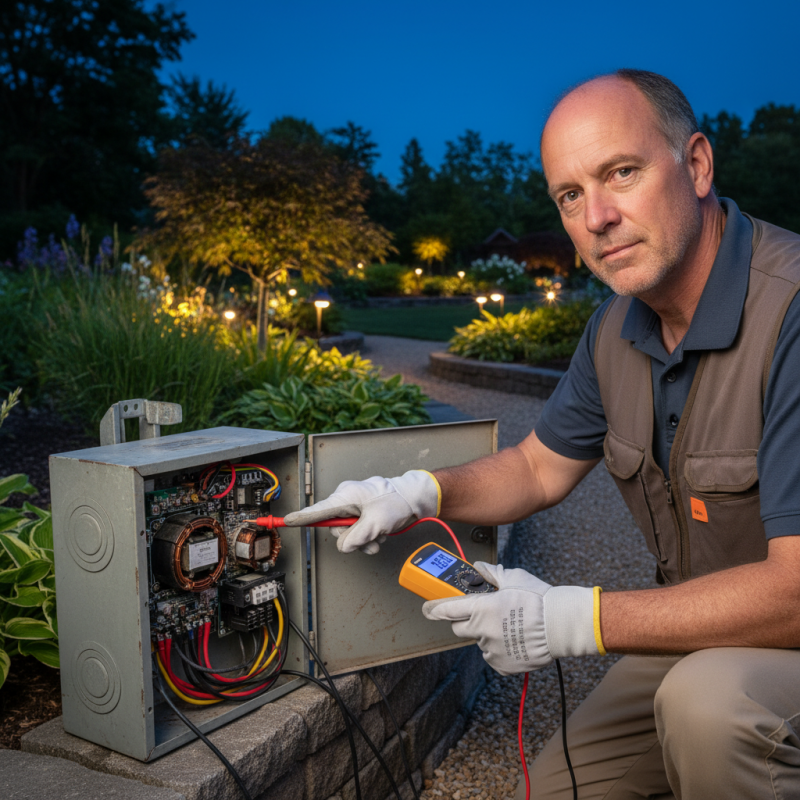
When troubleshooting landscape light transformers, start by checking the power source. Make sure the unit is plugged in and the outlet is functioning. Look for tripped circuit breakers or blown fuses. These issues are common and easy to fix. A simple reset can sometimes solve the problem.
Next, inspect the transformer itself. Broken connections or corroded terminals can cause failures. Examine wires for fraying or damage. Any visible wear might indicate a deeper issue needing attention. If the transformer feels warm or smells unusual, that’s a red flag.
Finally, evaluate the output. If lights flicker or fail to turn on, the transformer may not be delivering the correct voltage. Use a multimeter to test voltage output against the specifications. This step can reveal whether the problem lies within the transformer or the light fixtures themselves. Remember to consider the age of the transformer; older units may simply need replacing. Troubleshooting can be tricky, but meticulous checks will help identify the source of the problem.
When troubleshooting landscape light transformers, having the right tools is essential. A multimeter helps measure voltage and continuity. It’s crucial for checking if your transformer receives power. A screwdriver set is necessary for opening the unit and accessing internal components. Ensure you have both flathead and Phillips screwdrivers for flexibility. Wire strippers can also be useful for dealing with any frayed connections.
Besides these basic tools, you may need a flashlight. Sometimes, the work area is poorly lit, making visibility a challenge. A good pair of gloves protects your hands from sharp edges. Safety should always be a priority. If you have a ladder, it may be helpful for inspecting hard-to-reach areas.
Patience is critical during troubleshooting. Don’t rush through the process. Double-check connections and read any manuals available. Sometimes, issues may seem simple but can be rooted in more complex problems. Take your time with each step. Reflect on the steps you've taken if problems persist. This careful approach can save you time in the long run.
When troubleshooting a transformer for landscape lights, testing the output is crucial. Start by ensuring the transformer is plugged in and switched on. Use a multimeter to measure voltage. Set it to the appropriate range for low voltage, typically 12 volts for landscape lights. Carefully connect the meter probes to the output terminals. A reading close to the expected voltage indicates the transformer is functioning properly.
If the voltage is significantly lower than expected, check for loose connections. Corrosion or damaged wires may cause issues. Inspect the circuit for any breaks or wear. This requires a careful visual examination. Sometimes the problem lies within the landscape lighting itself. If possible, isolate each light to see if the problem persists. Take note of any lights that fail to illuminate.
Inconsistent voltage readings might signal deeper issues. It’s necessary to consider the transformer’s load capacity as well. Overloading can lead to reduced performance. Reflect on how many lights are connected. Is it excessive? Balancing the load could resolve several issues. Testing and adjusting your setup can be a bit of a trial and error process. Staying patient is key to finding the right solution.
| Step | Action | Tools Needed | Expected Outcome |
|---|---|---|---|
| 1 | Check Power Source | Multimeter | Power supply is functioning |
| 2 | Inspect Wiring | Visual Inspection Tool | No visible damage to wires |
| 3 | Measure Output Voltage | Multimeter | Output voltage within acceptable range |
| 4 | Test Circuit Functionality | Test Light Fixture | Lights function correctly |
| 5 | Evaluate Transformer Condition | Visual Inspection | Transformer in good condition |
| 6 | Consult Manual | User Manual | Follow manufacturer guidelines |
When troubleshooting landscape lights, checking wiring and connections is essential. Poor connections can lead to flickering or non-functioning lights. Start by inspecting all visible wires. Look for any signs of wear or damage. Frayed wires can cause short circuits and should be replaced promptly.
For the connections, ensure that every wire is secure. Loose or corroded connections can disrupt the electrical flow. Use pliers to firmly attach wire nuts. Additionally, check the connections at the transformer and light fixtures. Even slight disconnections can cause problems.
Tips: Regularly inspect your landscape lighting system for any wear and tear. This can prevent bigger issues down the line. When re-connecting wires, avoid twisting them too tightly, as this can lead to further damage. Consider labeling wires during a repair, making future troubleshooting easier.
Working with electrical transformers requires a keen understanding of safety precautions. According to a report from the National Fire Protection Association, electrical failures account for about 12% of all reported electrical fires. This underscores the need for vigilance when troubleshooting landscape lighting transformers.
Before starting any work, ensure your area is dry. Wet conditions can elevate the risk of electrical shock. Use insulated tools to minimize hazards. Always cut off power at the circuit breaker before beginning repairs to avoid accidents. Wearing rubber-soled shoes provides additional protection from electrical currents.
Tips: Inspect wires for any signs of wear. Frayed wires can lead to short circuits. Make sure to check connections regularly. Proper grounding of the transformer is essential for safe operation. According to industry standards, proper grounding reduces the risk of electrical shock and increases equipment lifespan.
Being proactive with maintenance is crucial. Document your inspections. This can help identify persistent issues and make troubleshooting easier. Transforming outdoor lighting can enhance safety and aesthetics, but always prioritize safety while working with electrical systems. Always question whether you've taken all necessary precautions before starting work.
: Start by checking the power source. Ensure it is plugged in and the outlet works.
Look for blown fuses or reset switches. These issues are common and often easy to fix.
Check for warm surfaces or unusual smells. These signs may indicate deeper problems.
A multimeter tests voltage and continuity. It helps determine if the transformer receives power.
Inspect all visible wires for wear or damage. Frayed wires can cause short circuits.
Ensure all connections are secure. Use pliers to tightly connect wire nuts for proper flow.
Rushing may overlook issues. Take time to verify connections and read manuals carefully.
Regularly inspect your system for wear. This simple maintenance can avoid bigger problems later.
Do not twist wires too tightly. Over-tightening can lead to damage and future issues.
Yes, labeling makes future troubleshooting easier. It saves time and reduces confusion later on.
When learning how to troubleshoot a transformer for landscape lights, it's essential to first identify common issues that may arise, such as flickering lights or complete power loss. Equipping yourself with the necessary tools, like a multimeter and wire strippers, is crucial for an effective troubleshooting process. Following a step-by-step guide to test the transformer output will help pinpoint the source of the problem, while checking the wiring and connections ensures that all components are functioning correctly.
Safety precautions should always be observed when working with electrical transformers to prevent accidents. By systematically addressing each aspect—output testing, wiring verification, and ensuring proper connections—you can effectively troubleshoot and resolve issues with your landscape light transformer, restoring illumination to your outdoor space.
