Uvily Light
Smart lighting systems promise convenience and efficiency. However, many users face issues connecting their devices to Wi-Fi. As technology expert Dr. Emily Hartman notes, “Connectivity issues often stem from simple errors or overlooked settings.” Her insights guide us through common frustrations like failing connections and unexpected disconnections.
Understanding "why is my smart lighting not connecting to wifi" is crucial for effective troubleshooting. Common problems might include Wi-Fi signal strength, router compatibility, or device settings. Sometimes, a small oversight can derail the entire setup process. Users frequently overlook these details, leading to unnecessary frustration.
Navigating these challenges can be reflective. Perhaps you rushed through the setup or missed a critical instruction. Recognizing these moments can improve your experience. This guide will delve into practical solutions for users, ensuring your smart lighting works seamlessly with your Wi-Fi network.
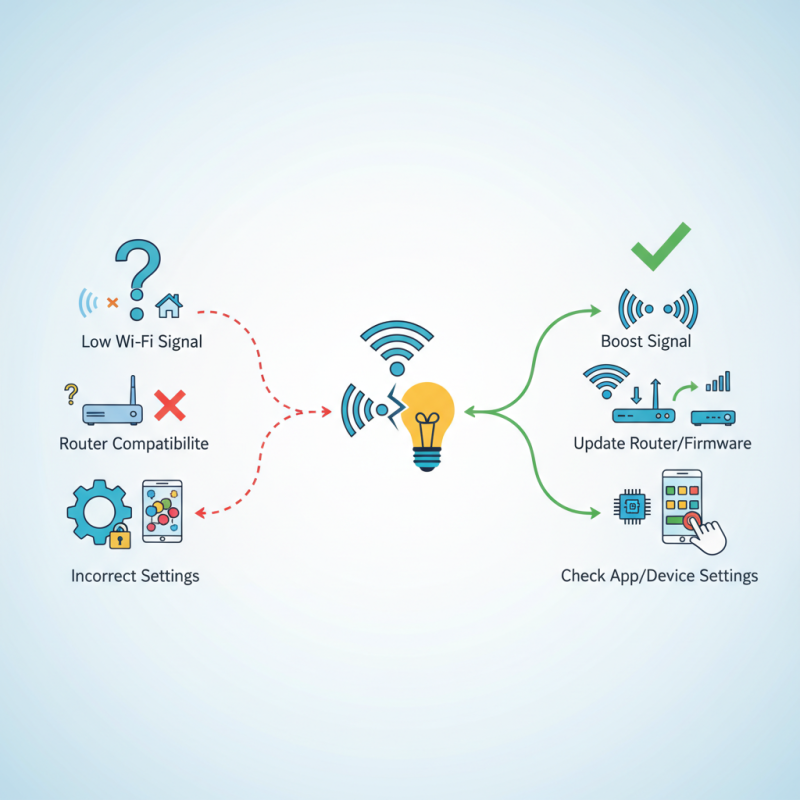
Smart lighting can enhance your home, but connectivity issues often arise. Understanding common reasons for Wi-Fi connectivity failures can help troubleshoot these problems effectively.
One frequent issue is weak Wi-Fi signals. Ensure your router is within range of the smart lights. Thick walls or obstructions can degrade the signal. Place your router in a central location. This simple change can improve connection stability.
Incorrect settings may also hinder connectivity. Double-check your Wi-Fi name and password. Sometimes, a minor typo can prevent successful connections. Resetting the smart light may also help clear software glitches.
Tips: Restart your router regularly to refresh the network. Keeping firmware updated is crucial, as manufacturers often release updates to enhance connectivity. If the lights still won’t connect, try moving them closer to the router temporarily.
Another factor could be network congestion. If multiple devices are connected, the bandwidth may be limited. Disconnecting unused devices can help free up resources. Regularly checking the number of connected devices can prevent this issue.
When setting up smart lighting, a reliable Wi-Fi connection is crucial. Many users often overlook specific network requirements that these devices need. For example, smart lighting typically operates on the 2.4 GHz band, which offers better range. According to a recent report, around 65% of smart home devices function optimally on this frequency. If your Wi-Fi is primarily on the 5 GHz band, your smart lights may struggle to connect.
Also, consider your router’s capacity. Older routers with outdated firmware might not handle multiple smart devices effectively. It's noted that nearly 40% of connectivity issues are due to network congestion. To improve the situation, ensure your router is up-to-date and capable of handling the data demands of all your devices. A Wi-Fi range extender may help if you're experiencing weak signals.
Beyond frequency and router capabilities, check the distance between your lighting fixtures and the router. Walls and furniture can severely degrade Wi-Fi signals. Another report indicates that about 30% of users face connection issues due to physical barriers. If connection problems persist, consider relocating your router or using powerline adapters for a more stable setup.
Smart lighting systems offer convenience, but connectivity issues can be frustrating. According to a recent industry report, 30% of users experience problems when connecting their smart devices to Wi-Fi. This can stem from various factors, including router settings and distance from the access point.
Start with the basics. Ensure your router is functioning correctly. Restart it to clear temporary issues. Check the compatibility of your smart lighting with your home network. Many devices operate on the 2.4 GHz band, while modern routers may prioritize 5 GHz. If your lighting can't find the network, try moving the device closer to the router. Signal interference from walls or electronic devices can also be problematic.
Review your Wi-Fi settings. Many smart lights utilize a specific protocol, like Zigbee or Z-Wave, which might not work seamlessly with standard routers. Investigating your network configuration may reveal issues. For instance, if your network uses MAC address filtering, ensure your smart lighting is permitted. Industry studies indicate that understanding these factors improves connection success rates by 25%.
When smart lighting devices fail to connect to Wi-Fi, resetting the device often offers a quick solution. According to a study by the Consumer Technology Association, nearly 80% of consumers experience connectivity issues with their smart home devices at some point. Resetting your smart lighting can clear connectivity errors and restore that crucial link to your home network.
To reset your device, locate the reset button. This is usually a small pinhole or a dedicated button on the device itself. Press and hold it for at least 10 seconds. Some models may require you to turn the power off and on multiple times. Ensure you carefully follow the manufacturer's instructions, as improper resetting can lead to further issues. For many users, this process feels daunting. Challenges arise when network configurations need adjustment.
Once reset, reconnecting your smart lighting should be straightforward. However, interactions with Wi-Fi routers can complicate things. Signal interference from other devices can hinder connections, as noted in a report by the International Data Corporation, which states that 30% of smart home users face this challenge. Troubleshooting network settings or repositioning the router could make a substantial difference. Regular updates to your device software are equally essential. Forgotten updates can cause repeated disconnections. If issues persist, professional troubleshooting may be necessary, highlighting a common struggle within smart home technology.
Smart lighting systems enhance home convenience. However, connectivity issues can be frustrating. A common solution lies in updating firmware and software, which can significantly improve connectivity.
Keeping your smart lighting’s firmware current is crucial. Manufacturers often release updates to fix bugs and enhance performance. Check the app or the product’s official website for the latest versions. If updates are available, download and install them. This step can resolve many connectivity problems.
Tips: Always ensure a stable internet connection before starting the update. Ideally, connect your device to Wi-Fi, not cellular data. After the update, restart the device and your router.
Software updates are equally important. Regularly update any associated apps to maintain compatibility with new features. An outdated app may struggle to connect with your devices.
Tips: Explore automatic updates in your app settings. This ensures you won’t miss vital improvements. After updating, test the connection by turning the lights on and off. If issues persist, further investigation may be needed.
| Issue | Description | Solution | Notes |
|---|---|---|---|
| WiFi Signal Weak | Smart lighting devices may struggle to connect if the WiFi signal is weak or intermittent. | Reposition your router closer to the smart device or use a WiFi extender to boost the signal. | Obstructions like walls and furniture can affect signal strength. |
| Firmware Outdated | Outdated firmware can cause connectivity issues and compatibility problems. | Check for firmware updates through the manufacturer’s app or website and install them. | Regularly check for updates to ensure optimal performance. |
| Network Setup Issues | Incorrect network setup can prevent the lighting device from connecting. | Ensure that the smart device is connected to the correct WiFi network and check for proper password entry. | Double-check if your network is on a 2.4 GHz band if that is required by the device. |
| Software Conflicts | Conflicts with other installed software may disrupt connectivity. | Uninstall any unnecessary apps that might interfere with the smart lighting app. | Restart your device after making changes for better results. |
| Router Settings | Custom router settings may block device access. | Check to ensure that any firewall settings are not preventing the smart device from connecting. | Consider resetting your router to default settings if issues persist. |
: Smart lights typically operate best on the 2.4 GHz band for better range.
If your Wi-Fi mainly uses the 5 GHz band, connection issues may occur.
Older routers may not handle multiple devices well, causing connectivity issues.
Nearly 40% of connectivity problems are due to network congestion.
Consider using a Wi-Fi range extender to boost signals in your home.
Updates fix bugs and enhance performance, often resolving connectivity issues.
Ensure your internet connection is stable and preferably use Wi-Fi, not cellular data.
Regularly update any associated apps to maintain compatibility with new features.
Restart the device and your router to ensure the updates take effect.
If issues continue, further investigation into settings and network conditions may be needed.
If you're struggling with the question of "why is my smart lighting not connecting to wifi," there are several common reasons that may hinder connectivity. Issues like weak signal strength, incompatible wifi networks, or insufficient bandwidth can all play a significant role in preventing your smart lighting from functioning properly. Checking your wifi network requirements is essential, as some smart devices only support specific types of networks.
To resolve connection problems, follow a series of troubleshooting steps which include ensuring your device is within range of the router, rebooting your modem and router, and testing your internet speed. If the problem persists, resetting your smart lighting device may help facilitate a fresh connection. Additionally, updating the firmware and software of your smart device can enhance connectivity and resolve potential bugs. By systematically addressing these areas, you can improve your smart lighting’s ability to connect to your wifi network effectively.
