Uvily Light
Outdoor fixtures face rain, salt, sun, and years of handling. Brass and aluminum respond differently. Brass is heavier, but its warm finish and corrosion resistance make it a compelling choice for door hardware, pathway lights, and exposed fittings. Aluminum offers lower weight and often costs less. Neither material wins in every setting.
For a practical comparison of why use brass instead of aluminum for outdoor fixtures, the details matter. The Copper Development Association’s technical guidance describes copper alloys’ corrosion behavior, while the International Aluminium Institute reports that recycled aluminum production can use up to 95% less energy than primary production. That is useful context, but it does not decide how a fixture will perform beside a coastal walkway or under a dripping eave. Materials scientist Michael F. Ashby’s published materials-selection framework emphasizes matching a material to its operating conditions. A concise paraphrase of that principle: “Choose for the exposure, not the label.” Brass can develop a natural patina, and some brass alloys may be vulnerable to dezincification in aggressive environments. Aluminum can also corrode, especially when its coating is damaged or dissimilar metals meet. Small details count. This guide compares durability, maintenance, appearance, cost, and installation, while acknowledging an imperfect truth: good design and proper finishing can matter as much as the metal itself.
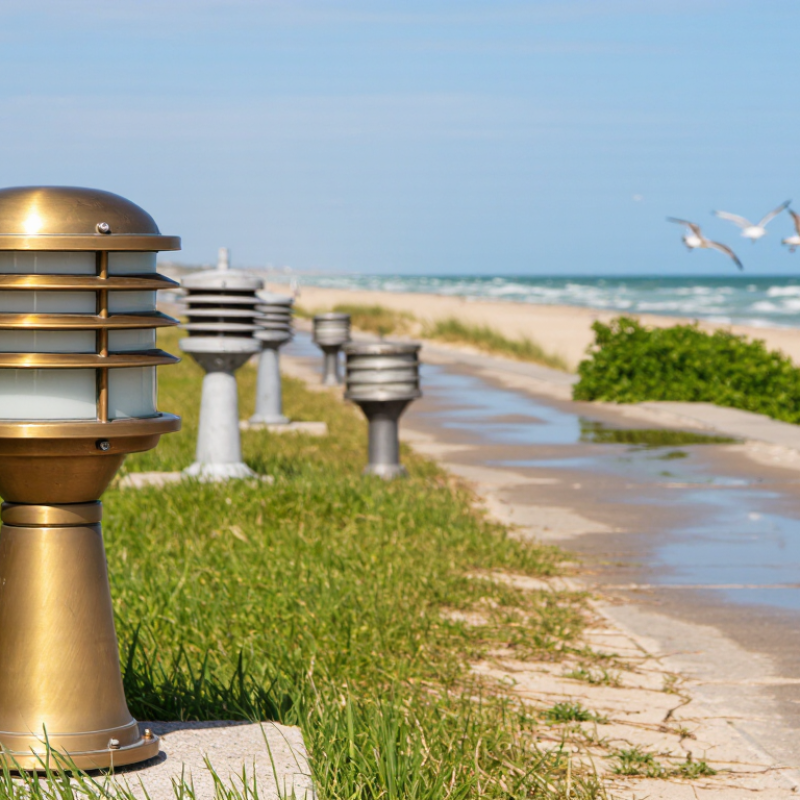
Brass and aluminum behave differently outdoors, even when both are machined into the same fitting. The Copper Development Association’s C26000 data sheet lists brass density at about 8.53 g/cm³; the Aluminum Association’s Aluminum Design Manual gives about 2.70 g/cm³ for aluminum. Brass feels substantial in a handrail bracket or valve body. Aluminum is easier to lift and can reduce loads on a wall-mounted fixture. Weight matters.
Surface behavior depends on the exposure. Aluminum forms a thin oxide layer that helps protect it, but salty spray can still cause pitting, especially around scratches and crevices. Brass generally resists ordinary weather well, yet some alloys can suffer dezincification in aggressive water. A damp coastal fitting deserves closer material selection than a garden light under an eave. Grades matter.
Fasteners and nearby metals also count. When brass or aluminum touches a dissimilar metal in wet conditions, galvanic corrosion may occur; insulating washers can help limit contact. Brass is often chosen where a warmer finish, heft, and durable threads are useful. Aluminum suits lighter assemblies and easier handling. A neat comparison can still mislead: alloy, coating, drainage, and maintenance may matter more than the metal name alone. Check the actual grade and site conditions before specifying either.
Brass is a practical choice for outdoor fittings that face repeated handling, vibration, and changing weather. Its solid feel and resistance to everyday wear suit hinges, latches, and connectors exposed to frequent use. A gate latch, for example, may be pulled hundreds of times each season; a well-made brass part can tolerate that routine without feeling flimsy. That matters outdoors.
Unlike lightweight aluminum, brass has more mass, which can help a small fitting feel stable and substantial. It also resists corrosion in many ordinary outdoor conditions. However, no metal is maintenance-free. Brass can darken or develop a patina, especially when rain and moisture linger. Some owners like that aged finish; others prefer periodic cleaning.
Good installation matters, too. Standing water, abrasive grit, and contact with dissimilar metals can shorten service life. I would not choose brass for every exposed structure: aluminum may be better when low weight is essential. But for compact hardware where durability and a firm feel matter, brass offers dependable strength. Check the fitting occasionally, clear away trapped debris, and tighten loose fasteners before wear spreads.
Representative tensile strength is about 345 MPa for C26000 brass and 310 MPa for 6061-T6 aluminum. Actual values vary by alloy, temper, and product form; tensile strength alone does not determine outdoor durability.
Outdoor hardware often stays wet longer than expected. Rain collects beneath a latch, and morning dew settles around screw heads. Brass generally handles these damp conditions well because its copper-based alloy develops a thin surface patina. That layer slows further attack in many ordinary outdoor settings. It is not the same as rust on iron.
The difference shows up over time. A brass gate fitting may darken, but it often remains usable without flaking rust staining nearby wood or stone. Choose a suitable brass alloy, since composition affects performance. Coastal salt, acidic cleaners, and trapped moisture can still cause damage. Brass is not invincible. Some alloys can suffer dezincification, where zinc leaches from the metal and leaves a weakened, porous surface. That risk deserves attention in harsh or persistently wet locations. A quick rinse after salt spray and occasional checks around joints can help catch trouble early. I would not assume every brass part needs no care; that assumption is easy to make, and sometimes wrong.
Brass gives outdoor hardware a warmer, more individual look than aluminum’s usually consistent silver-gray finish. A new brass latch may appear golden; rain, sunlight, and handling gradually deepen its tone. The Copper Development Association’s Copper in Architecture Design Handbook describes how copper alloys develop changing surface colors outdoors. Brass does not form exactly the same patina as pure copper, so its final appearance depends on alloy composition and exposure. Not perfectly uniform. That variation can make a gate handle feel established rather than newly installed.
The change is gradual, but the setting matters. ISO 9223:2012 classifies atmospheric corrosivity in six categories, from C1 to CX, using measured corrosion rates for metals including copper. Its first-year copper rates range from no more than 0.1 micrometers in C1 to 5.6–10 micrometers in CX. These figures are an environmental reference, not a service-life prediction for brass. Still, they show why a sheltered porch and a salt-exposed railing may age differently. Expect darker areas near screws, fingerprints, and water run-off. Some owners like the mellow brown; others prefer regular polishing, which removes developing surface color. Brass rewards patience, though its aging can be uneven.
| Reason | Brass outdoors | Compared with aluminum | Practical consideration |
|---|---|---|---|
| 1. Distinctive warm appearance | Copper-zinc brass alloys commonly have a warm gold, yellow, or reddish tone, depending on composition and finish. | Aluminum typically has a silvery appearance unless coated, anodized, or otherwise finished. | Choose the alloy and finish for the desired color; brass appearance varies with composition and surface treatment. |
| 2. Develops a natural patina | Uncoated brass can darken and develop surface films as it reacts with air and moisture, creating a changing, aged appearance. | Aluminum forms a thin oxide layer that usually appears less visibly golden or brown. | Patina is not uniform or guaranteed to look the same in every climate. Clear coatings can slow visible change. |
| 3. A classic decorative character | Its warm color and changing surface can suit traditional, architectural, and garden details. | Aluminum is often selected for a lighter, more contemporary or neutral look. | Appearance is subjective; samples viewed outdoors can help account for changing light and weathering. |
| 4. A substantial feel | Brass is denser than aluminum, so a brass fitting of the same size generally feels heavier. | Aluminum's lower density makes it useful where reducing weight is important. | Account for the extra weight when designing supports, gates, or mounted hardware. |
| 5. Good formability for detailed parts | Many brass grades can be machined, formed, or cast into detailed components. | Aluminum can also be formed and machined; the best choice depends on alloy, manufacturing method, and design. | Confirm that the specific grade and manufacturing process suit the part's loads and outdoor exposure. |
| 6. Useful electrical conductivity | Brass conducts electricity and is used for electrical and mechanical contacts in suitable applications. | Aluminum is also electrically conductive and is widely used in electrical applications. | Outdoor electrical connections require correctly designed joints, compatible materials, and protection from moisture. |
| 7. Useful thermal conductivity | Brass conducts heat and can be suitable for outdoor components where heat transfer is relevant. | Aluminum generally conducts heat more effectively by mass and is often chosen for lightweight heat-transfer parts. | Neither material should be chosen on appearance alone when heat performance is critical; compare specific alloy data. |
| 8. Reusable material value | Brass is recyclable, and its copper content can make scrap recovery worthwhile. | Aluminum is also widely recyclable and has established scrap-recovery streams. | Actual recycling depends on local collection and separation facilities, as well as coatings and attached materials. |
| 9. Repairable surface options | Depending on the component and finish, brass can often be cleaned, polished, or refinished when a renewed appearance is preferred. | Aluminum surfaces can also be cleaned or refinished, although anodized finishes require appropriate care. | Polishing removes surface material and changes the finish; follow guidance for the specific alloy and coating. |
| 10. A distinctive choice for visible hardware | Brass can make handles, plaques, fittings, and accents visually prominent while its surface changes over time. | Aluminum may be preferable for similar parts when lower weight or a silvery appearance is the priority. | For either metal, select a suitable outdoor alloy and account for salt, pollutants, standing water, and contact with other metals. |
Outdoor-use note: Brass is not corrosion-proof. Its performance depends on alloy, exposure, and maintenance; some brasses can suffer dezincification in aggressive conditions. Aluminum also develops a protective oxide layer, but it can be affected by certain environments and galvanic contact. Check material specifications for the intended site.
Brass earns its place outdoors through steady performance, not a promise of zero upkeep. Its copper-rich surface gradually develops a patina, which can help slow further corrosion. The finish may darken unevenly, especially around joints, screw heads, and areas that stay damp. That matters. A quick wash with mild soap and water, followed by drying, usually removes grit and salts before they build up. Avoid harsh abrasives; they can scratch the surface and leave bright, mismatched patches.
The AMPP IMPACT study estimated corrosion costs at about $2.5 trillion annually, or 3.4% of global GDP, in 2013. It also reported that corrosion-management practices could save 15–35% of those costs. Those figures cover many materials and industries, not brass alone, but they show why sensible upkeep matters. Brass still needs occasional inspection. Check water-trapping crevices and fasteners, particularly after wet seasons. In coastal or persistently damp settings, alloy choice and drainage deserve attention; some brass alloys can be vulnerable to dezincification under unsuitable conditions. A small flaw in the installation can make cleaning less effective. For an outdoor fitting, simple access for wiping and drying is part of long-term maintenance.
New brass often looks golden. Rain, sunlight, and handling gradually deepen its tone. The final color depends on the alloy and exposure.
Not always. Areas near screws, fingerprints, and water runoff may darken differently. That variation can look distinctive, or just untidy.
A copper-rich surface can develop patina that may slow further corrosion. It does not make brass maintenance-free.
Wash it with mild soap and water, then dry it. Remove grit and salt before they build up. Avoid harsh abrasives; scratches can leave bright patches.
Check joints, fasteners, and crevices where water may collect. A small installation flaw can make wiping and drying less effective.
Yes. A sheltered porch may age differently from a salt-exposed railing. Persistently damp areas need closer attention.
Polishing removes developing surface color and can create a brighter finish. The result may look uneven again over time. Not everyone will like that.
Choosing brass over aluminum for outdoor applications comes down to strength, weather resistance, appearance, and upkeep. Brass is a sturdy material suited to exposed settings, where fixtures may face regular handling and changing conditions. It also stands up well to moisture and resists many forms of corrosion, helping it remain dependable outdoors over time. These qualities help explain why use brass instead of aluminum for outdoor fixtures when lasting performance is a priority.
Brass also brings a distinctive warm finish that can develop a graceful patina as it ages, giving outdoor spaces character rather than simply showing wear. Its long service life can be supported with straightforward maintenance, such as occasional cleaning and routine checks. While the best choice depends on the fixture’s purpose and environment, brass offers a compelling combination of durable strength, resistance, visual appeal, and practical care for outdoor use.