Why Are My Outdoor Lights Flickering at Night Solutions?

Time:2026-04-29 Author:Liam
0%

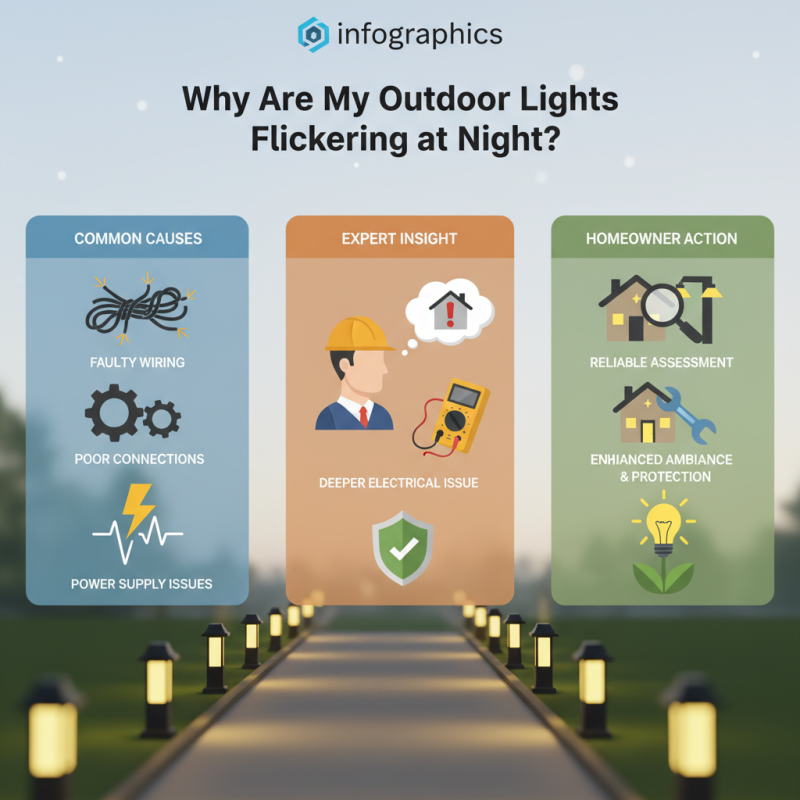
Outdoor lighting can be a crucial element for safety and aesthetics. Yet, experiencing flickering lights at night can be frustrating. Understanding "why are my outdoor lights flickering at night" is essential for homeowners. According to a recent report by the National Electrical Contractors Association (NECA), approximately 20% of outdoor lighting issues stem from wiring problems.

Expert Jack Henderson, a licensed electrician, states, "Flickering lights can often indicate a deeper electrical issue that needs attention." This insight reveals the importance of addressing these flickers before they escalate into serious problems. Various factors contribute to the flickering phenomenon, including faulty wiring, poor connections, or even issues with the power supply.

As homeowners, it’s vital to recognize that persistent flickering is not a trivial matter. A reliable assessment can help identify underlying problems. Many homeowners overlook these signs, potentially risking their safety and efficiency. Addressing the "why are my outdoor lights flickering at night" question might not just enhance your outdoor ambiance; it could also protect your home’s electrical integrity. Understanding this issue requires awareness and action.
Why Are My Outdoor Lights Flickering at Night Solutions?

Common Causes of Flickering Outdoor Lights at Night

Flickering outdoor lights at night can be frustrating. Understanding the common causes helps address the issue effectively. One main cause may be poor connections. Loose wiring or corroded sockets can disrupt power flow. Check your connections frequently to ensure everything is secure. Often, a simple adjustment can solve the problem.

Another significant cause is voltage fluctuations. Outdoor lights may flicker if there are sudden changes in the electrical supply. This could stem from heavy appliances being used nearby. If this happens often, consider consulting a qualified electrician. They can assess your entire electrical system.

Additionally, the type of bulbs used can be a factor. Some LED bulbs are more sensitive to power changes than traditional incandescent ones. Ensure you are using compatible bulbs for your fixtures. Remember, not all issues are an easy fix. Some might need deeper inspection and understanding of your outdoor lighting setup. Don’t hesitate to seek professional help when needed.

Electrical Issues That May Lead to Flickering Lights

Flickering outdoor lights can be a source of frustration and concern. There are several electrical issues that might cause this problem. One possibility is loose or corroded connections. When wires are not securely connected, it can lead to fluctuations in power. Checking the connections can be a good place to start.

Another issue is the compatibility of the bulbs with the fixtures. Older fixtures may not handle modern LED bulbs well. This mismatch can cause lights to flicker. It's essential to ensure that the bulbs match the specifications of the fixtures.

Additionally, voltage fluctuations from the power source can contribute to flickering. If the voltage is inconsistent, it can affect how the lights operate. Monitoring the voltage can reveal issues with your electrical system. Sometimes, hiring a qualified electrician for a detailed inspection is necessary. These subtle electrical problems require careful attention to ensure safety and functionality.

Environmental Factors Affecting Outdoor Lighting Performance

When outdoor lights flicker at night, various environmental factors could be at play. One primary issue is the weather. Heavy rain or strong winds can interfere with electrical connections. For instance, water may seep into junction boxes and fixtures. This moisture can cause short circuits, leading to flickering lamps. Sometimes, snow accumulation can also weigh down light fixtures, misaligning them and affecting their performance.

Another common factor is the voltage fluctuations caused by heavy electrical demand. During peak usage times, your outdoor lighting may flicker as the electrical load increases. Nearby devices, like air conditioners or power tools, can amplify this effect. Additionally, landscaping changes can pose challenges. Newly planted trees or shrubs might obstruct light paths, creating shadows that mimic flickering effects.

Regular maintenance of outdoor lighting is essential. Inspect connections and replace damaged components as needed. Consider adjusting light angles to minimize the impact of environmental shifts. Reflecting on these factors will help you address flickering issues more effectively. Even simple changes in your lighting layout can yield improvements.

Steps to Troubleshoot Flickering Outdoor Lights

Flickering outdoor lights can be both annoying and puzzling. To troubleshoot, begin by checking the bulbs. Ensure they are securely fitted. Loose bulbs often cause erratic lighting. Replace any burnt-out bulbs with new ones. Sometimes, simply changing the bulb resolves the issue.

Next, inspect the wiring. Look for any visible damage, fraying, or loose connections. If you find any exposed wires, this could be a safety hazard. In this case, it’s best to call a professional. Keep electrical connections dry and clean from debris. Moisture can also lead to flickering lights.

Consider the power source. Sometimes, circuit overloads or faulty switches may cause uneven power supply. If other electrical devices are also affected, this might indicate a bigger issue. Regular maintenance is key. Learn to identify these problems early. Regular checks can save you time and money in the long run.

Solutions to Prevent Outdoor Lights from Flickering at Night

Flickering outdoor lights can be frustrating. Various factors contribute to this issue, and understanding them is key. Loose wiring, voltage fluctuations, and environmental conditions often lead to these disturbances. According to a study by the National Electrical Manufacturers Association, 30% of homeowners experience flickering issues due to poor electrical connections. These connections can wear down over time or may not be well-installed.

To prevent your outdoor lights from flickering, consider inspecting your wiring. Ensure all connections are tight and secure. Regular maintenance of your lighting system is crucial. Professionals recommend checking your fixtures and replacing any that show signs of wear. Additionally, using voltage stabilizers can help manage fluctuations. They maintain a consistent power flow, reducing the risk of flickering.

Environmental factors also play a role. Strong winds can cause movement, affecting outdoor fixtures. Moreover, since outdoor lights are exposed to elements, moisture can seep in, causing corrosion. Regularly check for water damage and address any issues immediately. Staying proactive can minimize flickering and enhance the lifespan of your outdoor lighting system.

Why Are My Outdoor Lights Flickering at Night Solutions? - Solutions to Prevent Outdoor Lights from Flickering at Night

Issue Potential Causes Solutions
Flickering Lights Loose connections Check and tighten wire connections
Dim Lights Voltage drops Upgrade to a higher wattage transformer
Intermittent Flickering Incompatibility with bulbs Use compatible LED or halogen bulbs
Lights Turning Off Faulty motion sensor Replace or adjust the motion sensor
Constant Flicker Power surges Install a surge protector

FAQS

: What causes outdoor lights to flicker?

: Flickering can be caused by loose connections, bulb compatibility issues, or voltage fluctuations.

How can loose wiring affect outdoor lights?

Loose wires may lead to unstable power, causing the lights to flicker intermittently.

Are modern LED bulbs compatible with all outdoor fixtures?

Not always. Older fixtures may not handle modern LED bulbs effectively, resulting in flickering.

Can weather conditions impact outdoor lighting?

Yes, heavy rain or strong winds can cause moisture intrusion, leading to short circuits and flickering.

What role do environmental factors play in flickering lights?

Factors like nearby devices using high power can cause voltage fluctuations, impacting light stability.

How often should outdoor lighting be maintained?

Regular maintenance is crucial, including inspecting connections and replacing damaged components.

What can be done to stabilize voltage for outdoor lights?

Using voltage stabilizers can help maintain a consistent power flow, reducing flickering.

How does landscaping affect outdoor lighting?

New trees or shrubs may block light paths, creating shadows that mimic flickering effects.

Should I hire a professional for electrical issues?

Yes, complex wiring or persistent flickering issues may require a qualified electrician's expertise.

What are some simple ways to minimize flickering?

Regular inspections and adjusting light angles can help prevent flickering due to environmental changes.

Conclusion

Flickering outdoor lights at night can be a frustrating issue for homeowners. Understanding "why are my outdoor lights flickering at night" involves exploring several common causes, including electrical issues such as faulty wiring or loose connections, as well as environmental factors like wind, rain, or temperature changes that may affect performance.

To address this problem, it is crucial to troubleshoot the flickering lights systematically. Begin by checking the wiring and connections for any signs of damage, followed by looking into the environmental elements that could be impacting your outdoor lighting. Implementing preventative measures, such as securing connections and choosing suitable lighting fixtures for outdoor use, can help maintain consistent performance. Identifying and resolving these issues will enhance the reliability of your outdoor lighting and ensure a safer environment.

Liam

Liam

Liam is a dedicated marketing professional with a profound expertise in the industry, where he excels at highlighting the unique advantages of our core products. With a keen understanding of market trends and consumer needs, Liam frequently updates our company’s professional blog, providing......