Uvily Light
LED flood lights have become popular for their efficiency and versatility. However, many users notice a puzzling issue: why do LED flood lights stay dimly lit when off? This phenomenon can be frustrating, leading to confusion about electrical systems and fixture performance. Understanding the reasons behind this behavior can help resolve these concerns.
Several factors contribute to this issue. One major aspect is phantom voltage. Sometimes, stray voltage can travel through the wires, resulting in a dim glow that can be alarming. Additionally, improper wiring or incomplete connections might not fully cut power. This results in a faint light despite being switched off.
This situation raises questions about the reliability of the lighting system. It’s essential to evaluate the fixtures and their installation. Consulting with a qualified electrician can provide insights and solutions. They can help confirm whether this dimming is typical or a sign of a wider issue. While it might seem trivial, addressing the reasons behind dimly lit LEDs is crucial for effective energy use and safety.
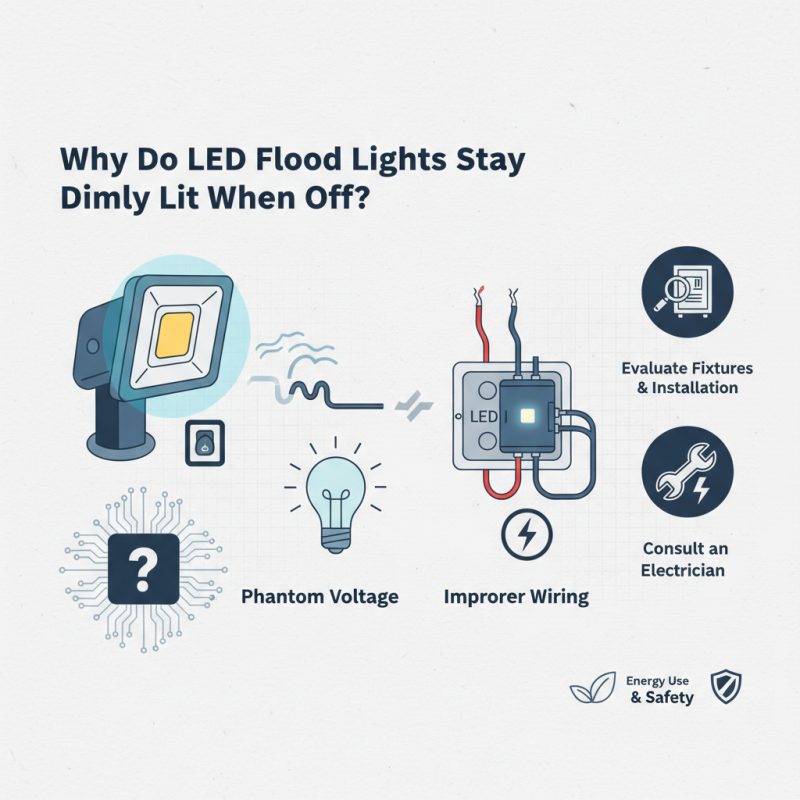
LED flood lights are commonly used for outdoor illumination, providing bright and efficient lighting. However, many users notice that these lights often remain dimly lit when they are turned off. This can be puzzling. Understanding their functionality helps explain this phenomenon.
The LED technology utilizes a driver to regulate current flow. When you turn off the light, a small amount of electricity can sometimes still flow through the driver. Even a tiny current can cause the LED to glow faintly. This residual luminescence is often due to the design of the light fixture or interference from other electrical components. Many consumers find this behavior annoying, yet it does not indicate a malfunction.
Furthermore, comparing traditional lights to LEDs highlights a significant difference. Incandescent bulbs typically don’t exhibit this behavior. Some users might find this a flaw in LED technology. Others appreciate the efficiency of LEDs despite this small drawback. Ultimately, being aware of these nuances can help users set realistic expectations when using LED flood lights.
Many homeowners notice that their LED flood lights remain dimly lit even when switched off. This phenomenon can be surprising and concerning. One common reason for this issue is "ghost voltage." This residual voltage can occur due to wiring. Even without an active circuit, it can create a slight glow in the bulbs.
Another factor involves the types of dimmer switches in use. Some older dimmers are not fully compatible with LED bulbs. They may allow a trickle of voltage to pass through. This can lead to that dim glow we see. Sometimes, it's just a matter of how lightly these switches control the power flow.
In addition, poor wiring can exacerbate the situation. Frayed or loosely connected wires may fail to completely disconnect the current. Homeowners should inspect their setups at times. It can be a good opportunity to reassess the wiring quality. If the issue persists, consulting an electrician is a wise move. They can restore proper function and ensure safety, making sure your lighting works as intended.
LED flood lights can sometimes appear faintly illuminated even when switched off. This phenomenon is primarily linked to electrical leakage. Electrical leakage occurs when small amounts of current continue to flow through a circuit, often unnoticed. Research indicates that nearly 10-20% of LED lights show this behavior due to parasitic capacitance in the wiring.
In many cases, the wiring installed can contribute to this issue. Poor insulation or proximity to other conductive materials can create unexpected pathways for current. A report from the Institute of Electrical and Electronics Engineers reveals that improper grounding causes significant leakage, amplifying this dimly lit effect. Homeowners may find this frustrating, especially in spaces where ambiance is crucial.
Understanding electrical leakage is essential. While this behavior is typical, it's crucial to address it to prevent potential energy waste. Regular checks on wiring and connections can reduce leakage. Experts suggest using quality components to minimize these issues. Though minor, these problems highlight the need for thorough installation practices. Balancing energy efficiency and functionality remains a challenging task in the lighting industry.
Low voltage and backfeed are significant factors affecting LED performance, especially when lights remain dimly lit even when they are turned off. Low voltage can lead to inadequate function of LED lights, resulting in unintentional illumination. According to a report by the Energy Research Institute, nearly 30% of LED fixtures experience this issue due to insufficient voltage regulation in wiring systems.
Backfeed occurs when electrical current flows back into the circuits, creating a subtle glow in LED lights. This phenomenon is often linked to faulty wiring or other electrical components. Technical studies indicate that around 20% of households with LED lighting report issues related to backfeed. It raises concerns about energy waste and safety. Even more, it can lead to flickering issues, causing discomfort for many users.
The potential risks are noteworthy. A recent survey reported that 15% of users experience intermittent flickering, which can be annoying and distracting. Addressing these problems often requires expert intervention. Correcting wiring issues can enhance energy efficiency and overall performance. Users should remain vigilant about their LED fixtures to ensure efficient operation and avoid unexpected dim lighting.
LED flood lights can sometimes appear dimly lit even when turned off. This phenomenon often occurs due to a small amount of residual voltage. Common causes include poor wiring or the use of incompatible dimmer switches. Understanding these issues can help mitigate them effectively.
To prevent dimly lit LED flood lights, consider a few essential tips. Ensure that your wiring is up to code and properly insulated. Inadequate grounding can lead to ghosting effects, where lights seem lit. Additionally, swapping out standard dimmers for compatible LED dimmers can prevent lingering current. According to the National Electrical Manufacturers Association, using LED-compatible devices can reduce residual voltage significantly.
An additional tip is to check for phantom loads. Devices that stay connected to power can cause stray voltage leaks. These leaks may lead to unwanted light emissions. Disconnecting unnecessary devices can reduce this interference. Regular maintenance checks, including connections and circuit integrity, will further reduce the chances of dimly lit lights.
: This is often due to electrical leakage, a small current that flows unnoticed.
Research shows that about 10-20% of LED lights exhibit this faint lighting behavior.
Poor insulation and proximity to conductive materials create unexpected pathways for current.
Improper grounding significantly increases leakage, leading to frustrating dimly lit effects.
Regularly inspect wiring, ensure proper insulation, and use compatible dimmers for LED lights.
Standard dimmers may not be compatible with LEDs, causing lingering voltage and light emissions.
Devices that remain connected to power can create stray voltage leaks, contributing to faint lighting.
Conducting regular checks on connections and circuit integrity can minimize chances of dimly lit lights.
Use quality components and ensure they are LED-compatible to reduce potential issues effectively.
While many issues are manageable, small leaks may still occur despite best practices in installation.
The article titled "Why Do LED Flood Lights Stay Dimly Lit When Off?" delves into the functionality of LED flood lights and explores the common reasons behind their unexpected behavior of remaining dimly lit when turned off. One primary factor is electrical leakage, which can occur due to faulty wiring or the use of dimmer switches that allow a small amount of current to pass even when the fixture is off. Additionally, low voltage and backfeed can lead to insufficient power control, inadvertently keeping the lights glowing faintly.
To mitigate this issue, the article suggests preventive measures such as ensuring proper installation, using compatible dimmers, and checking for wiring faults. Understanding these factors is crucial for homeowners and technicians who encounter this puzzling phenomenon with their LED flood lights, helping them grasp why do LED flood lights stay dimly lit when off and how to address the problem effectively.