How to Install Low Voltage Garden Lights for 2026?

Time:2026-05-01 Author:Mason
0%

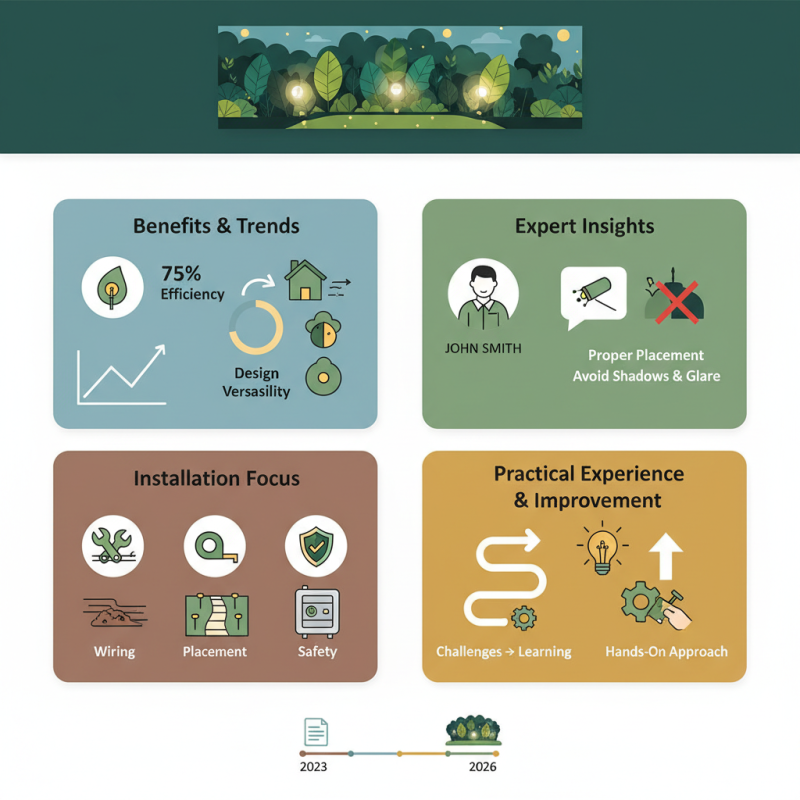
Installing low voltage garden lights can transform outdoor spaces into enchanting areas. According to a 2023 report by the National Association of Landscape Professionals, 75% of homeowners now prefer low voltage lighting for its energy efficiency and design versatility. Experts suggest that understanding how to install low voltage garden lights correctly is crucial to maximizing their benefits.

Renowned landscape designer, John Smith, emphasizes, "Proper installation brings the best out of garden lighting." His insights remind us that even minor mistakes can undermine the desired effect. For instance, incorrect bulb placement can create unwanted shadows or glares. Beyond aesthetics, ensuring safety and adherence to guidelines is vital.

While many resources exist, it's important to recognize that practical experience can vary. Some may find challenges in wiring or placement. Reflection on these issues is key to improvement. With the right approach, anyone can effectively enhance their garden's ambiance through low voltage lighting.
How to Install Low Voltage Garden Lights for 2026?

Choosing the Right Low Voltage Garden Lights for Your Needs

Choosing the right low voltage garden lights is essential for any outdoor project. Start by assessing your garden's layout. Consider the areas you want to illuminate. This could be pathways, flower beds, or even water features. The lights should enhance your garden's beauty and provide safety.

There are various types of low voltage lights available. Spotlights are great for highlighting specific plants. Path lights guide visitors along walkways. String lights create a cozy atmosphere. Think about the ambiance you wish to create. The color temperature also matters. Warm white lights offer a softer glow, while cool white lights provide a modern touch.

Quality is another critical factor. Look for lights that are waterproof and durable. Check the materials and construction. Some fixtures may seem attractive but can fail under harsh weather. Installation simplicity is vital too. Choose lights that offer easy setup, yet ensure they meet your design needs. Reflecting on your choices will help you create a beautiful and functional garden.

Gathering Necessary Tools and Materials for Installation

Installing low voltage garden lights can enhance your outdoor space significantly. Before starting, it's crucial to gather the right tools and materials. This ensures a smooth installation process and prevents unnecessary delays.

Begin with a shovel for digging. You'll need wire cutters and connectors as well. A voltage tester is essential to ensure safety. Don’t forget the power supply, fixtures, and low voltage wiring. Consider solar options for easy setup.

**Tips:** The more organized your tools, the better your experience will be. Label your cables to avoid confusion. Keep extra connectors handy; they can save time.

While gathering materials, check everything twice. Missing parts can cause frustration. Also, think about your garden's layout. Planning the lighting design ahead can help you visualize where everything will go. This saves time during installation.

**Tips:** Sketching your plan can be beneficial. Visual representation helps with spacing and placement. Don't rush this step; a thoughtful approach pays off later.

Step-by-Step Installation Process for Low Voltage Garden Lights

Installing low voltage garden lights can enhance your outdoor space significantly. The installation process is straightforward but requires careful planning. Begin by selecting the right locations for your lights. Ensure they illuminate walkways and highlight beautiful plants. Use stakes to mark light positions before digging.

Next, lay out the low voltage wire. It's essential to measure the distance between each light carefully. Too tight or too loose wire can affect performance. Use a shovel to create a shallow trench where the cable will lie. This helps protect the wire from damage by lawn equipment.

Tips: Consider using adjustable fixtures. This allows you to direct light where it’s needed most. Always check for underground utilities before digging. Be mindful of weather conditions. Installing lights during wet weather can lead to safety hazards. Make sure your connections are secure, using waterproof connectors if possible. A mistake in wiring can lead to problems later.

Finally, test each light before securing everything in place. This allows for adjustments if needed. If some lights don't work, double-check the wire connections. It's better to troubleshoot now than later. Your garden deserves the best lighting!

How to Install Low Voltage Garden Lights for 2026? - Step-by-Step Installation Process for Low Voltage Garden Lights

Step Number Installation Step Materials Needed Estimated Time
1 Plan Your Layout Paper, Pen 30 mins
2 Gather Materials Low Voltage Lights, Transformer, Wire 1 hour
3 Install the Transformer Screwdriver, Mounting Hardware 30 mins
4 Lay the Wire Low Voltage Wire, Splices 1 hour
5 Position the Fixtures Garden Stakes 45 mins
6 Connect the Fixtures Wire Connectors 30 mins
7 Test the Lights Power Source 15 mins
8 Finalize Installation Tools for Cleanup 30 mins

Testing and Adjusting Your Garden Lights After Installation

Testing and adjusting your garden lights after installation is crucial for optimal performance. Start by ensuring all lights are properly connected and functioning. Check for any flickering or inconsistent brightness. Adjust the position of each light to achieve the desired illumination and coverage. Walk around your garden after dusk to see how the lights perform.

If you notice any areas lacking light, you may need to reposition some fixtures. Sometimes, a simple adjustment can make a big difference. Evaluate the angles of the lights. They should highlight key features like plants, pathways, and garden ornaments. Consider using dimmers for flexibility in brightness. This can enhance the ambiance but may require additional adjustments.

Lastly, reflect on your installation process. Were there any challenges? Did you find some areas more difficult to light than others? Taking notes can help improve future installations. Gathering feedback from family or friends can offer fresh perspectives. Adjusting your garden lights is an ongoing process that requires attention to detail. Proper testing today leads to a more beautiful garden tomorrow.

Low Voltage Garden Lights Installation - Voltage Levels Test Results

Maintaining and Troubleshooting Low Voltage Garden Lights

Maintaining low voltage garden lights is essential for their longevity and performance. Regularly check connections to ensure they are secure. Loose connections can lead to flickering lights or total outages. Inspect the wire for any signs of wear or damage, as this can affect the circuit.

Cleaning your lights is equally important. Dust and dirt can accumulate, reducing brightness. Use a soft cloth and some mild soap to wipe down the fixtures regularly. Avoid using harsh chemicals that may damage the light's materials.

Tips: Consider using a light shield to keep your fixtures clean. A simple barrier can protect against dirt and debris. If your lights flicker, check your transformer. Sometimes the issue lies in insufficient power. When troubleshooting, always ensure the transformer is working correctly and that it matches the wattage requirements. Taking these steps can save you from costly replacements and keep your garden lights shining brightly.

FAQS

: What tools are necessary for installing low voltage garden lights?

: You'll need a shovel, wire cutters, connectors, a voltage tester, and wires. Solar lights simplify this process.

How can I ensure proper planning before installation?

Sketch a layout of your garden. Visual representation aids in deciding light placements effectively.

Why is it important to check wire connections?

Loose connections can cause flickering lights or outages. Regular checks help maintain performance.

What should I do if my lights are flickering?

Inspect the transformer. A power issue may be the cause. Ensure it meets the wattage required.

How can I clean my garden lights safely?

Use a soft cloth and mild soap. Avoid harsh chemicals to prevent damage to the fixtures.

Is it necessary to test the lights before securing them?

Yes, testing allows for adjustments. Troubleshooting at this stage saves you from issues later.

Should I dig a trench for the wire?

Yes, a shallow trench protects the cable from lawn equipment and keeps your installation safe.

How can I ensure my lighting layout is effective?

Mark positions with stakes and measure carefully. This avoids wire issues and enhances your garden’s appeal.

What can I do to protect my lights from dirt?

Consider installing a light shield. It can minimize debris buildup and keep fixtures cleaner.

What happens if parts are missing during installation?

Missing parts can lead to frustration. Always check your materials before starting to avoid delays.

Conclusion

In the article "How to Install Low Voltage Garden Lights for 2026," readers are guided through the essential steps to achieve beautiful outdoor lighting using low voltage fixtures. The first step involves choosing the right low voltage garden lights tailored to individual needs, ensuring optimal brightness and aesthetic appeal. Next, the article emphasizes the importance of gathering all necessary tools and materials for a successful installation.

Following preparation, a detailed step-by-step installation process is presented, making it easy for homeowners to install these lights safely and effectively. After installation, the article highlights the importance of testing and adjusting the lights to ensure they function as intended. Finally, it covers maintenance and troubleshooting tips to keep the lights in excellent condition. This comprehensive guide provides valuable insights on how to install low voltage garden lights, making outdoor spaces more inviting and enjoyable.

Mason

Mason

Mason is a seasoned marketing professional with a deep expertise in the company's offerings and a passion for driving brand awareness. With a strong background in digital marketing strategies, he has an innate ability to connect with diverse audiences and effectively communicate product benefits.......