How to Find the Latest Trends in Smart Outdoor Lighting?

Time:2026-11-02 Author:Sophia
0%

Smart outdoor lighting is changing quickly, but the newest product is not always the best fit. Homeowners now compare connected controls, efficient LEDs, solar-assisted fixtures, and lighting that responds to movement or changing daylight. The real question is what are the latest trends in smart outdoor lighting, and which ones solve everyday problems? A dark driveway, a weather-exposed porch, or a garden path can reveal more than a glossy product photo.

Useful research starts with specific needs. Check whether fixtures support your existing hub or Wi-Fi network, and read the manufacturer’s guidance on weather resistance, installation, and maintenance. Look for practical details: Can you dim the entry lights from your phone? Will a motion sensor cover the gate without lighting the neighbor’s windows? Does the app still work when the internet drops? Small tests matter. A feature can sound clever and still be frustrating in daily use.

Current designs also put more attention on warm color temperatures, adjustable schedules, and reduced glare. These features can make a patio feel inviting while helping avoid unnecessarily bright beams. Solar models and energy-monitoring controls are worth comparing, though performance depends on sunlight, placement, and local conditions. Trend reports and retailer rankings can point toward promising options, but verify claims against product specifications and independent reviews. And be honest about trade-offs: smart controls add convenience, yet they can bring setup steps and future compatibility concerns. A little skepticism is useful. The best choice is the one that works reliably outside, night after night.
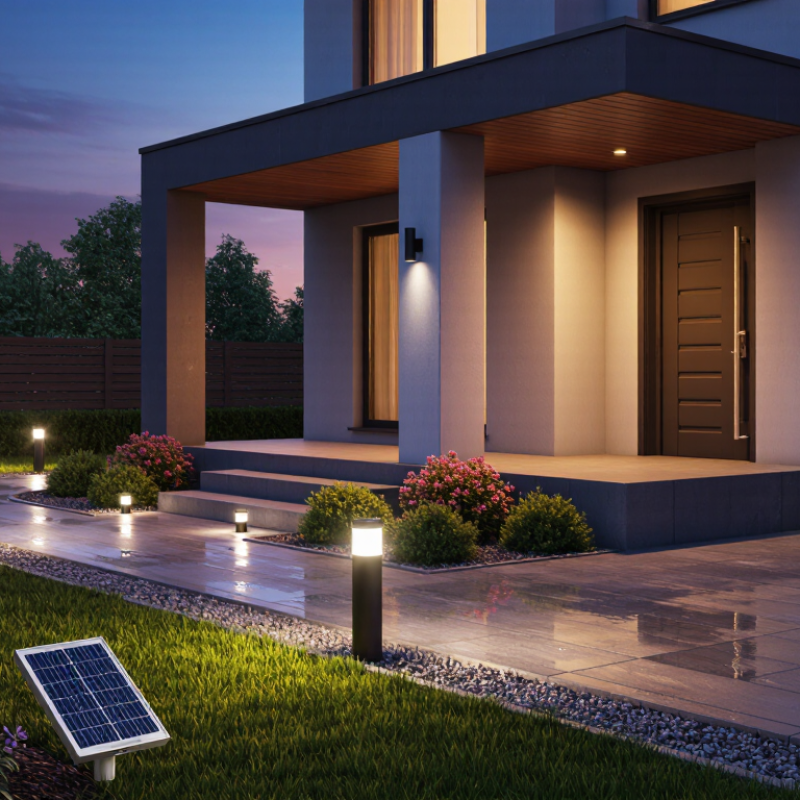
How to Find the Latest Trends in Smart Outdoor Lighting?

Define the Scope of Smart Outdoor Lighting Trends

Defining the scope of smart outdoor lighting trends means deciding what counts as “smart” before comparing products or projects. Include systems that sense conditions, respond automatically, or allow remote control. A motion sensor that brightens a path only when someone approaches is a useful example. A solar lamp with a timer may be relevant too, but it offers a narrower kind of automation. The boundary is not always clear.

Set practical limits around location and purpose. Garden paths, building entrances, parking areas, and public streets face different needs. Weather resistance matters on an exposed deck; glare control matters near bedroom windows. Consider trends in sensors, connectivity, energy use, installation, and maintenance. Also note whether your research covers new installations or upgrades to existing wiring. Small details change the comparison.

Choose a time frame and evidence standard. Product announcements can reveal emerging features, while field reports and energy data show whether those features work over time. Look for repeated patterns across independent sources, not one striking launch. It is easy to mistake a polished demonstration for a lasting trend. I would track uncertain claims separately, especially when long-term repair data is scarce. Some categories may overlap. That is worth recording, rather than forcing every example into a neat label.

How to Find the Latest Trends in Smart Outdoor Lighting: Define the Scope

Start with the technology baseline: compare LED energy use with incandescent lighting, then track outdoor-specific developments such as adaptive controls, connectivity, and resilience.

Energy-use index (incandescent = 100). The LED value of 25 represents the upper-bound equivalent of the U.S. Department of Energy statement that LEDs use at least 75% less energy than incandescent lighting. This is a technology benchmark, not a measurement of smart outdoor lighting adoption.

Source: U.S. Department of Energy, LED Lighting.

Identify Reliable Sources for Emerging Developments

Reliable trend research starts with sources that show their evidence. Check university lighting laboratories, peer-reviewed journals, public pilot-project reports, and technical guidance from recognized standards organizations. Look for publication dates, test conditions, sample sizes, and measured outcomes—not just claims about efficiency or comfort. That matters.

For example, a report on adaptive dimming should explain when lights changed brightness, how sensors detected movement, and whether energy use was measured over several weeks. Compare those findings with city procurement documents or field evaluations. Real installations often reveal practical issues, such as sensor delays near trees or uneven light on wet pavement. The data may be imperfect.

Trade publications can help spot new ideas, including connected controls, warmer nighttime color, or tools for monitoring energy use. Treat announcements as leads, not proof. Check whether an article identifies its sources and separates editorial reporting from paid material. Then search for independent testing or a second report with similar results. If details are missing, note the gap rather than filling it with assumptions. I have found that a small, well-documented outdoor trial can be more useful than a polished forecast with no methods. Verify dates, too; lighting technology changes, but older findings may still describe limits that newer demonstrations overlook.

Track Advances in Connected Lighting Technologies

To track connected lighting advances, watch how sensors, controls, and network standards work together—not just how bright a fixture is. The International Energy Agency’s Energy Efficiency 2023 report says LEDs grew from about 5% of global lighting sales in 2013 to around 50% in 2022. That shift matters: efficient lamps create a stronger foundation for connected controls, but connectivity adds value only when it improves operation.

Look for outdoor systems that respond to daylight, motion, and scheduled use, then report performance in a clear dashboard. The IEA’s 2024 Energy Efficiency report estimates that buildings account for about 30% of global final energy consumption. This is not a lighting-only figure, but it shows why better control deserves attention.

On a site walk, check whether a path light dims after nearby activity ends, or whether a sensor reacts to passing traffic. Small details matter. Ask how devices communicate, whether components from different suppliers can work together, and how updates are handled. Open standards can make future changes easier, though compatibility still needs testing. Not every sensor helps. I’d compare actual energy and maintenance records before trusting a polished demonstration; weather, placement, and false triggers can make real results less tidy.

Compare New Designs, Features, and Sustainability Practices

To compare new smart outdoor lights, look beyond sculptural shapes and polished product photos. Slim path stakes, shielded wall fixtures, and low bollards create different effects around a garden. Check where the beam lands at dusk, and whether it spills into windows or the night sky. Small details matter. A warm, downward-facing light may feel calmer than a bright fixture with exposed LEDs.

Compare practical features under similar conditions. Note brightness, color temperature, motion-sensor range, and whether schedules work without a constant internet connection. A sensor that triggers for passing branches can become annoying. Battery-powered models also need realistic seasonal checks; short winter days may reduce solar charging. Spec sheets help, but they rarely show the light on a wet path.

Sustainability is more than a recycled-materials claim. Look for replaceable batteries, repairable components, clear care instructions, and packaging that avoids excess. Durable metal housings may last longer than brittle plastic, though their impact depends on sourcing and manufacturing. I sometimes give sleek designs too much credit. Comparing warranties, spare-part access, and energy use can reveal a less glamorous, more useful choice.

How to Find the Latest Trends in Smart Outdoor Lighting? - Compare New Designs, Features, and Sustainability Practices

Lighting trend Design direction Smart features Sustainability considerations What to compare
Warm, low-glare LED fixtures Compact path lights, shielded wall lights, and downward-directed beams; warm-white options commonly include 2,200–3,000 K. Dimming, schedules, and scene control can tailor light levels to the time of night and the activity. LEDs use less energy than traditional incandescent lighting. Shielding and lower brightness can also help limit light spill into the night sky. Color temperature, glare control, dimming range, and whether light is directed only where needed.
Motion- and presence-responsive lighting Discreet fixtures paired with sensors for entrances, driveways, and other areas used intermittently. Occupancy detection, adjustable timeout periods, and standby dimming help avoid continuous full-output operation. Reducing unnecessary operating hours can lower electricity use; careful sensor placement helps prevent unwanted activation. Detection range, sensitivity settings, timeout options, and performance in the intended environment.
Daylight-aware and scheduled control Lighting plans that combine ambient fixtures with time-based or daylight-responsive operation. Sunset/sunrise schedules, timers, and photocell-based control can switch lights according to time or available daylight. Automatic shutoff or reduced output during daylight and quiet hours can help prevent wasted energy and excess nighttime lighting. Scheduling flexibility, daylight-sensor behavior, manual override, and operation during network outages.
Solar-powered outdoor lights Self-contained path, garden, and accent lights with a photovoltaic panel, rechargeable battery, and LED source. Some designs offer adjustable brightness, motion activation, or dusk-to-dawn operation. They can avoid grid electricity during use, but performance depends on sun exposure, season, battery condition, and operating settings. Panel placement, expected runtime, battery replacement options, and performance in shaded or low-sun locations.
Connected, interoperable controls Simple fixture designs managed through a central app, hub, switch, or compatible smart-home system. Remote control, grouping, automation, and status monitoring may be available; capabilities vary by system. Automation can support efficient schedules. Longer-term usefulness depends on software support, repairability, and the ability to operate basic lighting locally. Compatibility, hub or subscription requirements, offline operation, update policy, and privacy settings.
Durable, serviceable fixtures Weather-resistant housings, replaceable components, and designs intended for long-term outdoor installation. Fault alerts or maintenance reminders may be available on connected systems; these features are not universal. Repairable parts and replaceable batteries or light sources can reduce premature disposal. Material recyclability depends on local collection facilities. Ingress-protection rating, warranty terms, spare-part availability, and whether batteries or light sources can be replaced.

Comparison note: An IP65 rating indicates dust-tight protection and protection against water jets; it does not mean a fixture is suitable for immersion. Match the fixture rating to its installation location and follow the manufacturer’s instructions.

Verify Trends Through Product Releases and Field Use

A product launch is a signal, not proof of a lasting trend. Compare release dates, technical sheets, and revisions across several suppliers. Look for concrete changes: outdoor-rated sensors, adjustable dimming, replaceable drivers, and documented lumen maintenance. The International Energy Agency’s 2023 Tracking Clean Energy Progress report says LEDs made up about 50% of global lighting sales in 2022. That figure covers lighting broadly, not outdoor fixtures alone, so don’t treat it as an outdoor-market share.

Then check how the products behave on site. Record power use, operating hours, dimming levels, and sensor activations before and after installation. Inspect the same pole after rain, cold nights, and several weeks of traffic. False triggers matter. A sensor that brightens for every passing branch may erase expected savings. The U.S. Department of Energy’s 2022 Energy Savings Forecast of Solid-State Lighting in General Illumination Applications is useful for understanding projected LED savings, but projections are not field results. Keep the logs. Compare measured energy use with the published baseline, and note glare, dark patches, and maintenance calls. A small pilot can mislead; one location rarely represents a whole district. I’d treat clean early results as provisional, especially when crews have not yet faced a full season.

FAQS

Which sources are useful for researching new outdoor lighting developments?

Check university lighting labs, peer-reviewed journals, public pilot reports, and technical guidance from standards organizations. Look for dates, test conditions, sample sizes, and measured results.

What should an adaptive-dimming report explain?

It should show when lights changed brightness, how sensors detected movement, and whether energy use was measured over several weeks. Compare findings with field evaluations. Sensor delays near trees can matter.

How can I tell whether a lighting announcement is reliable?

Treat trade-publication announcements as leads, not proof. Look for identified sources, independent testing, and a second report with similar findings. Missing details should stay missing.

What should I check in connected outdoor lighting systems?

See whether lights respond to daylight, movement, or schedules, and whether performance appears in a clear dashboard. Ask how devices communicate and receive updates. Details matter.

Do connected controls always save energy?

No. Compare energy and maintenance records before trusting a demonstration. Weather, sensor placement, and false triggers can change real results.

What design details affect outdoor lighting?

Check where the beam falls at dusk and whether light reaches windows or the night sky. A warm, downward-facing fixture may feel calmer than exposed LEDs.

Which features should I compare between outdoor lights?

Compare brightness, color temperature, sensor range, and schedule settings under similar conditions. Check whether schedules work without constant internet access. Wet paths reveal things spec sheets miss.

How can I assess a light’s sustainability and durability?

Look for replaceable batteries, repairable parts, clear care instructions, and modest packaging. Compare warranties, spare-part access, and energy use. I may still give sleek designs too much credit.

Conclusion

Finding the latest developments in smart outdoor lighting starts with defining what counts as a trend, such as connected controls, energy efficiency, adaptable illumination, or improved durability. To answer the question “what are the latest trends in smart outdoor lighting,” compare information from reliable sources, including technical publications, product announcements, and reports from lighting professionals. Look for developments that appear consistently across multiple sources rather than treating every new feature as a lasting shift.

Pay attention to advances in connectivity, automation, sensors, and user control, then compare how new designs balance convenience, appearance, sustainability, and practical performance. Consider factors such as energy use, repairability, weather resistance, and compatibility with existing systems. Finally, verify promising trends by checking product releases and observing how the technologies perform in real outdoor settings. This approach helps distinguish useful, well-supported changes from short-lived claims and provides a clearer picture of where smart outdoor lighting is heading.

Sophia

Sophia

Sophia is a dedicated marketing professional with an exceptional depth of knowledge about her company's products and services. With a keen understanding of market trends and customer needs, she crafts insightful blog posts that not only inform but also engage readers, enriching the company’s online......