Uvily Light
Hanging Christmas lights on high peaks is a festive tradition that brings joy to many households. However, it poses significant safety risks. According to the National Safety Council, falls are the leading cause of injury during the holiday season. Understanding how to hang Christmas lights on high peaks safely is crucial to preventing accidents.
Expert Mike Anderson, a professional installer with over 15 years of experience, emphasizes the importance of safety: "Always prioritize your well-being when decorating at heights." Using proper equipment and techniques can mitigate risks. Moreover, nearly 30% of holiday decorating injuries occur due to improper ladder use, highlighting the need for better practices.
The right methods can enhance both safety and aesthetic appeal. Unfortunately, many people overlook the importance of planning and preparation. It is essential to evaluate your approach before you climb. Are you equipped with the right ladder? Have you considered wind conditions? Reflecting on these questions can prevent unnecessary accidents. Taking the time to learn how to hang Christmas lights on high peaks safely ensures that your holiday season remains merry and bright.
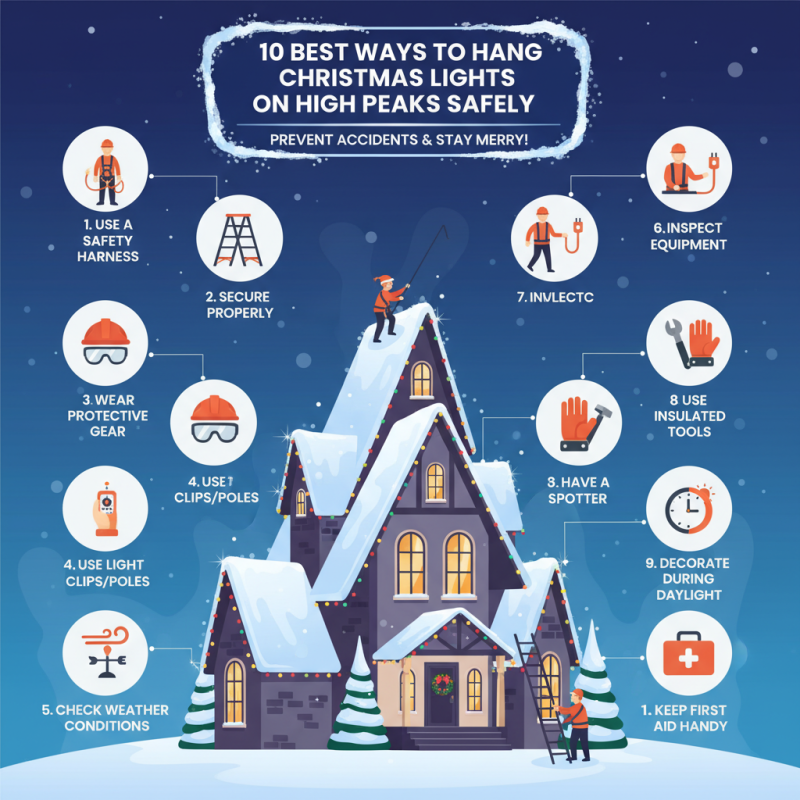
When it comes to hanging Christmas lights on high peaks, safety should always come first. Essential equipment plays a crucial role in ensuring a secure setup. A sturdy ladder is vital; it should extend well above the roofline for better stability. Use a ladder that is rated for the weight you’ll bear, and always have a partner hold it. This additional support is invaluable.
Another key piece of equipment is a safety harness. Wearing one will keep you secure while working at heights, reducing the risk of falls. Look for harnesses that are comfortable and easy to put on. Additionally, using decorative clips or hooks designed for outdoor lights will prevent damage to your roofing and avoid creating fire hazards. These clips can hold lights securely, ensuring they stay in place despite wind or weather.
Tips for your lighting project include planning your layout beforehand. Sketching your design will help visualize the end result. Do not overload circuits. Distribute lights over multiple outlets to avoid electrical issues. Always test your lights before installation to catch any malfunction early. Taking these precautions can save you time and effort down the line.
Hanging Christmas lights on high peaks can add a magical touch to your holiday decor. However, safety precautions are crucial before you embark on this task. Proper planning can prevent accidents. Start by inspecting your setup area carefully. Look for loose branches, unstable surfaces, and other hazards. Ensure your ladder is in good condition and placed securely.
Wear appropriate safety gear. Hard hats can protect against falling debris. Gloves can help prevent slips. Don’t forget a safety harness if you’re working on a steep incline. It’s worth reflecting on your experience level. If you're not confident, consider asking a friend to lend a hand. Having someone around can make the process safer and more enjoyable.
Check the weather forecast before climbing. High winds or rain can make conditions dangerous. If the weather looks unfavorable, reschedule. Keep emergency contact numbers handy, just in case. Lastly, remember to take breaks. Fatigue can lead to mistakes, so give yourself time to rest and reassess your progress. Each step you take should be measured and cautious.
Hanging Christmas lights on high peaks can be both festive and dangerous. Safety must be your top priority. According to the National Safety Council, falls account for nearly 36% of all unintentional injury deaths. It's crucial to take necessary precautions when working at heights.
Start by assessing your structure. Ensure it can support the weight of the lights and any equipment you use. A reliable ladder is essential. Use a step ladder if you are near the edge. For higher peaks, consider renting scaffolding. This provides a stable platform. Professional reports highlight that using the right equipment reduces accidents by up to 40%. Secure your ladder on level ground to prevent slipping.
When attaching lights, opt for clips instead of nails or staples. Clips reduce the risk of damaging your building and provide a secure hold. Moreover, current industry data emphasizes that light strands rated for outdoor use minimize fire hazards. Pay attention to the placement. Avoid overloading circuits, as this could lead to potential failures. Aim for even spacing, ensuring a beautiful and secure display.
This attention to detail can make all the difference. Remember, while it's important to create a dazzling display, your safety should always come first. Reassess your methods regularly to make sure they are as secure and efficient as possible. Mistakes can be costly, so continuous improvement is key.
Choosing the right type of Christmas lights for elevated areas can be a challenge. According to a recent report from the National Electrical Manufacturers Association (NEMA), safety is crucial when decorating high peaks. LED lights are increasingly favored for their durability and energy efficiency. They consume up to 75% less energy than traditional incandescent bulbs. Furthermore, their lower heat output reduces the risk of fire hazards.
When selecting lights, consider their weight and design. Lightweight, flexible strands are ideal for tall installations. Additionally, look for weather-resistant materials to ensure they withstand winter conditions. Statistics from the U.S. Consumer Product Safety Commission (CPSC) show that nearly 200 Christmas light-related injuries occur annually, often from falls while hanging decorations. This highlights the need for reliable equipment and careful planning.
Reflecting on common mistakes is important. Many overlook the power limitations of their outdoor outlets. Ensure that circuits can handle the load to avoid tripped breakers. Also, consider the height and accessibility of your installation site. A safer approach may involve using scaffolding or a lift, rather than ladders, to reach those high peaks. Proper preparation can lead to a successful and safe holiday decorating experience.
Dismantling Christmas lights can be a daunting task, especially when they've been dangling from high peaks. According to a study by the American Lighting Association, around 30% of holiday lighting injuries occur during take-down. This statistic highlights the importance of safety and efficiency. To navigate this challenge, consider using a sturdy ladder or an aerial lift. Always have a partner assist you, as this can help prevent falls.
Plan your approach before tackling the removal. Start from the highest peak and work your way down. Label each strand as you remove them to simplify storage. The goal is to minimize tangling, which can lead to frustration next season. Inadequate organization can result in needing replacements, costing up to 20% more than previous years, according to a market analysis by IBISWorld.
Be mindful of the condition of your lights. Frayed cords or damaged bulbs should be discarded. The cost of repairing or replacing lights can nick your holiday budget. Remember, being hasty can lead to missed damage. With careful removal and storage, you can enhance both safety and efficiency for next year’s festive display.
: Inspect your area for hazards like loose branches and unstable surfaces.
Yes, wear hard hats, gloves, and consider a safety harness if needed.
Use a reliable ladder and secure it on level ground to prevent slipping.
Opt for clips instead of nails or staples to avoid damaging your building.
Start removing lights from the highest point and label strands to avoid tangling.
Reschedule your task if winds or rain make conditions unsafe.
Frayed cords and damaged bulbs should be discarded to avoid higher repair costs.
Always have a partner assist you during the removal process.
Regularly reassess your methods and make sure they are secure and efficient.
Organize them carefully to minimize tangling and ensure easy access next season.
When considering how to hang Christmas lights on high peaks safely, it is essential to begin with the right equipment. This includes sturdy ladders, harnesses, and ropes to ensure maximum safety while decorating elevated areas. Before climbing, take necessary safety precautions such as checking the weather and ensuring that all equipment is in good condition.
A step-by-step guide can help you securely attach lights to high structures efficiently. It's important to choose the appropriate type of Christmas lights designed for elevated settings, which can withstand environmental factors. Finally, when dismantling the lights after the holiday season, follow efficient tips to ensure a smooth process without damage to your decorations or the structures themselves. By following these guidelines, you can enjoy a festive display while prioritizing safety.
