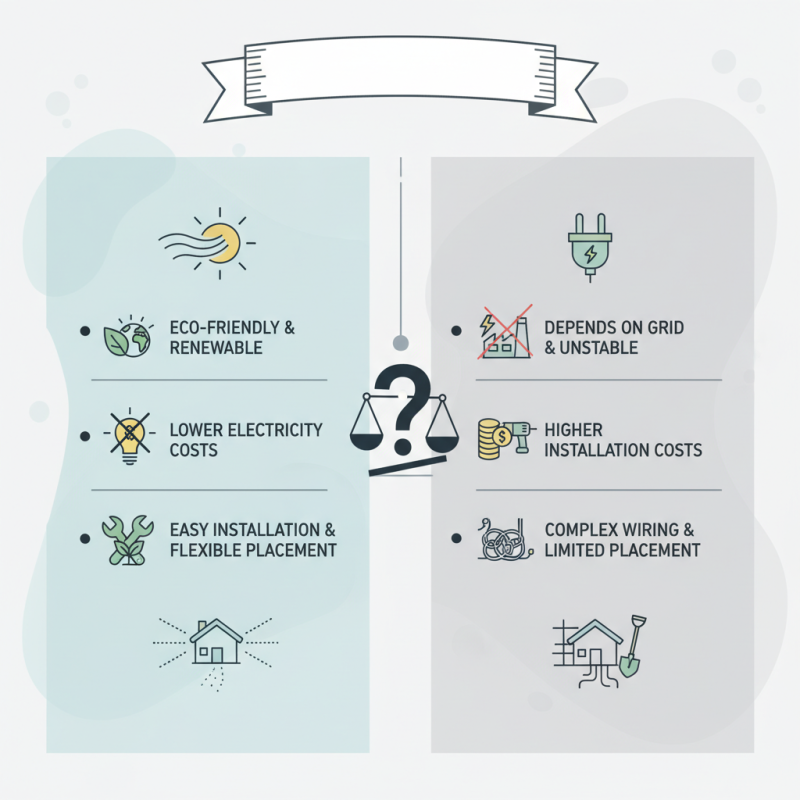
Solar lighting has become increasingly popular in recent years. Many people wonder, "what are the benefits of solar vs wired lighting?" This question is essential for anyone considering sustainable options. Solar lights harness energy from the sun, making them eco-friendly. They require little maintenance and can significantly reduce electricity bills.
In contrast, wired lighting relies on electrical systems. It has higher installation costs and depends on a stable power supply. Solar lighting can be placed in remote locations, where traditional wiring is impractical. It offers flexibility in design and installation, adapting to diverse outdoor spaces.
However, solar lighting does have limitations. Its efficiency can be affected by weather conditions and geographical location. Some users may find solar lights less bright than wired systems. Despite these imperfections, the shift towards renewable energy solutions is undeniable. Overall, weighing the pros and cons of each option is essential for informed decision-making.
Benefits of Solar Lighting: A Cost-Effective Alternative to Wired Systems
Solar lighting presents a compelling alternative to traditional wired systems, particularly in terms of cost-effectiveness. Solar lights harness energy from the sun, reducing electricity bills significantly. They have lower installation costs since they don’t require extensive wiring or expert labor. This makes them accessible for various settings, from residential gardens to public parks.
Moreover, solar lighting systems offer flexibility in installation. You can place them in remote areas where wired options are impractical. They have minimal maintenance needs and long lifespans, which adds to their financial benefits over time. It’s worth noting that the initial investment may feel high. However, with ongoing energy savings, they can quickly pay for themselves.
Energy independence is another critical aspect to consider. Solar lighting relies on renewable energy, reducing reliance on grid systems. This can be empowering for communities in off-grid locations. Despite certain limitations, such as performance during cloudy weather, advancements are continuously improving solar technology. Balancing these factors leads to informed decisions about using solar over wired systems.
Environmental Impact: Solar Lighting's Role in Reducing Carbon Footprint
Solar lighting presents a compelling case in the fight against climate change. Utilizing renewable energy, it helps reduce the carbon footprint significantly. According to the International Energy Agency, traditional lighting accounts for about 19% of global electricity consumption. In contrast, solar lights draw energy from the sun, ultimately cutting greenhouse gas emissions.
When we consider the embodied energy in wired systems—installation, maintenance, and energy transmission—solar lighting’s environmental benefits widen. The carbon dioxide emissions linked to manufacturing and transporting wired lighting systems can be staggering. A report from the World Resources Institute suggests that solar lighting can reduce up to 1,500 kg of CO2 per unit over its lifespan. This data highlights the long-term sustainability of solar options.
However, there are challenges with solar lighting. Weather dependency can lead to reliability issues, especially in less sunny regions. Initial costs may deter adoption, despite lower long-term expenses. Continuous investment in technology will be necessary to maximize efficiency and overcome these hurdles. As systems improve, the role of solar lighting in reducing our carbon footprint will only grow stronger.
Benefits of Solar Lighting Compared to Wired Lighting
This chart illustrates the comparative benefits of solar lighting versus wired lighting. It highlights key metrics such as carbon emissions reduction, energy cost savings, installation time, and maintenance frequency, showcasing the advantages of solar lighting in terms of environmental impact and overall efficiency.
Installation Efficiency: Comparing Setup Time and Labor for Solar vs. Wired
When comparing solar lighting to wired lighting, installation efficiency is key.
Solar lights are generally easier to set up.
They don’t require extensive wiring or electrical work, which can be time-consuming.
A simple ground stake or a hook is often all that’s needed for solar installations.
This may attract DIY enthusiasts who appreciate straightforward projects.
Conversely, wired lighting involves planning. You need to assess the wiring path, trenching, and connecting to a power source.
This can lead to higher labor costs and longer setup times.
The installation process becomes a significant factor in decision-making.
Some people may overlook this detail, impacting overall project timelines.
Yet, it's crucial to reflect on the long-term implications.
Solar lights might need periodic maintenance,
such as replacing batteries or keeping panels clean.
Wired systems may require less frequent attention once installed.
Each option has its challenges. Understanding these nuances can lead to making better choices based on personal needs.
Energy Savings: Analyzing Long-Term Cost Benefits of Solar Lighting Solutions
Solar lighting solutions are gaining traction due to their energy-saving potential. According to a study by the National Renewable Energy Laboratory, solar-powered lights can reduce electricity costs by up to 75% over time. These fixtures harness sunlight during the day, storing energy for night use. This results in significant savings on utility bills.
In urban areas, the cumulative energy savings from using solar lighting can be substantial. Some municipalities report that the cost of maintaining wired lighting systems can be three to four times higher than the upfront installation cost of solar units. The reduction in energy consumption translates to lower greenhouse gas emissions, contributing to environmental sustainability.
Tip: Evaluate your local climate and sunlight exposure. Not every area benefits equally from solar solutions. Understanding your environment can optimize your savings.
While the initial investment may appear higher for solar lighting, the long-term benefits often outweigh these costs. Maintenance needs are generally lower, yet the technology can sometimes be less reliable in areas with limited sunlight. Balancing these factors is essential in decision-making.
Tip: Consider the potential for battery degradation over time. Regular monitoring can ensure longevity and efficiency of solar fixtures.
Benefits of Solar Lighting Compared to Wired Lighting
| Category |
Solar Lighting |
Wired Lighting |
| Initial Investment |
Moderate |
High |
| Installation Cost |
Low |
High |
| Maintenance |
Very Low |
Moderate to High |
| Energy Source |
Solar |
Electricity |
| Operational Costs |
Zero |
Variable |
| Lifespan |
5-10 years |
10-20 years |
| Environmental Impact |
Low |
High |
| Reliability |
Dependent on Sunlight |
Consistent |
Maintenance and Durability: Lifespan and Upkeep of Solar Lights vs. Wired Options
Solar lights offer a unique advantage over traditional wired lighting in terms of maintenance and durability. They are self-sufficient, relying on solar energy. This means less dependency on electrical grids. Their installation does not require extensive electrical work. Therefore, they are less prone to damage during installation.
The lifespan of solar lights often exceeds that of wired options. Many solar lights can last up to five years or more with minimal upkeep. Regular checks on battery health are essential. In contrast, wired lights may require frequent bulb replacements and more complex repairs. Wiring issues can also lead to higher maintenance costs. Solar lights are designed to withstand diverse weather conditions, making them more durable outdoors.
However, solar lights are not without their challenges. The performance can be hindered by prolonged cloudy weather. Users may face limitations in brightness due to battery capacity. These factors can lead to occasional frustration. Investing in higher-quality solar lights can mitigate these issues. Nonetheless, the overall lower maintenance demands and longer lifespan make solar lighting a compelling choice for many consumers.
Conclusion
Solar lighting offers numerous advantages over traditional wired systems, making it a compelling choice for many applications. One primary benefit of solar lighting is its cost-effectiveness, as it reduces installation costs by eliminating the need for extensive wiring and infrastructure. Environmentally, solar lights play a vital role in decreasing carbon footprints, aligning with sustainability goals.
Additionally, installation efficiency is a significant factor; solar lights can often be set up quickly and with less labor compared to wired alternatives. Over time, users can enjoy substantial energy savings, enhancing the long-term economic benefits of solar solutions. Maintenance and durability also favor solar lights, which typically require less upkeep and have longer lifespans than their wired counterparts. Therefore, when considering "what are the benefits of solar vs wired lighting," it is clear that solar systems present a practical and eco-friendly option for modern lighting needs.
 Uvily Light
